
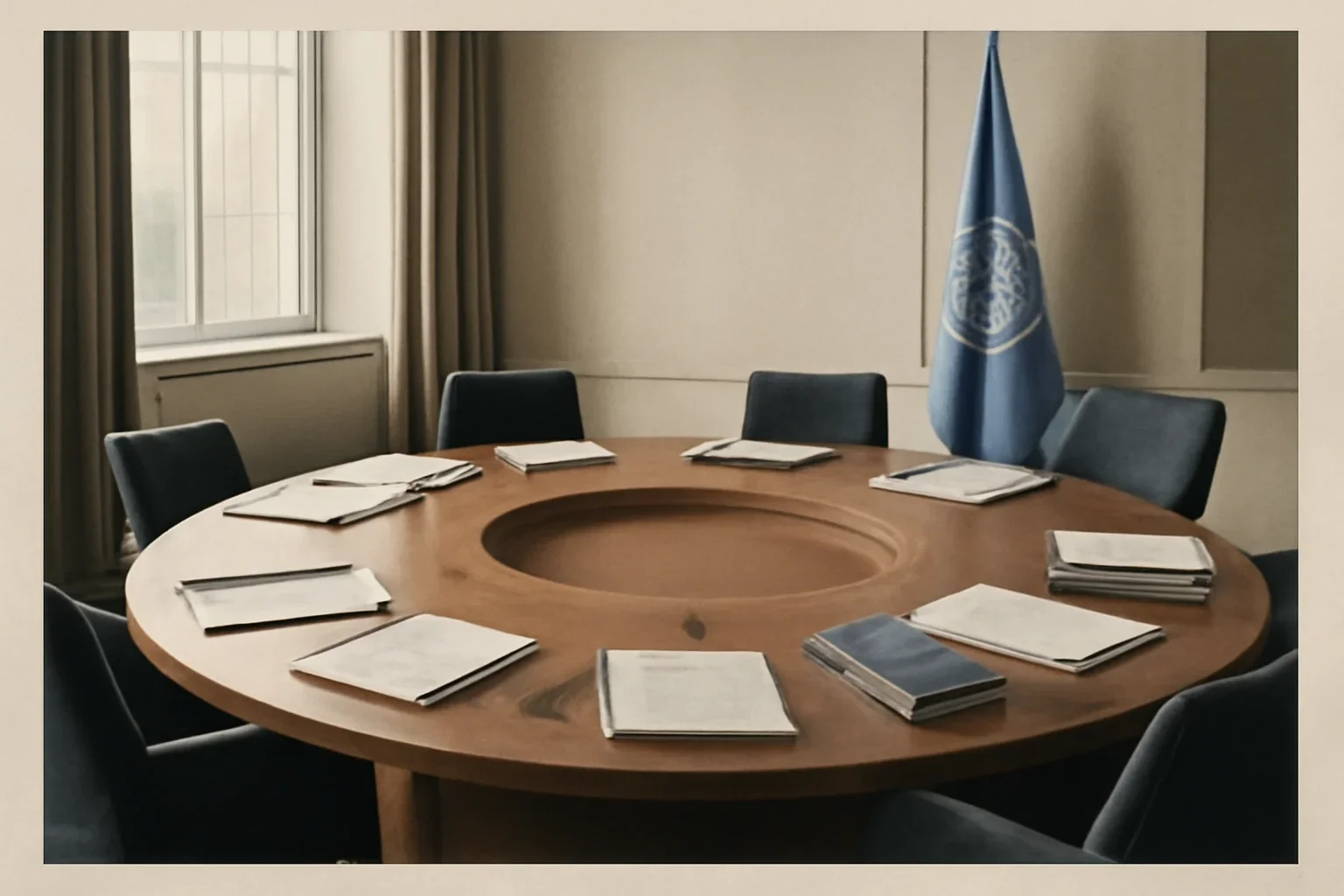
The idea behind the term
The rules-based international order is often invoked as a defence of predictability. At its best, it describes a world where states expect law, institutions, and negotiated norms to matter alongside power.
Institutions, norms, and contestation becomes easier to follow once the label is connected to the real choices governments, institutions, or publics are making around it.

Why it matters in practice
Critics point out that the phrase can sound selective when major powers invoke rules inconsistently. That tension is not a reason to ignore the concept; it is a reason to examine who defines the rules and how enforcement actually works.
The framework matters most to states and societies that depend on stable trade, legal process, and institutional restraint. For them, order is not a slogan but a practical condition for planning ahead.
Where readers often oversimplify it
The easiest mistake is to treat the term like a fixed answer instead of a live debate. Once the label becomes fashionable, it often starts carrying more certainty than the underlying evidence can support.
The framework matters most to states and societies that depend on stable trade, legal process, and institutional restraint. For them, order is not a slogan but a practical condition for planning ahead.
How to keep reading with more discipline
Readers who want a better grip on the debate should compare speeches with behaviour. The gap between the two often reveals the real contest.
For a wider reading path, pair this piece with Global Governance and Human Rights.