

A public contract can select a more expensive proposal because its technical strengths receive enough weight in the evaluation. That is an intended possibility under the World Bank’s use of rated criteria, which brings qualities such as delivery methods, risk management and performance into a combined assessment with cost.
The Bank’s current explanation of rated criteria says they are mandatory for most large international contracts it finances. It describes a two-envelope process: evaluators assess technical proposals before opening the financial submissions of bidders whose technical bids are responsive. The scope is World Bank-financed procurement; it is not a rule governing every public purchase worldwide.
For citizens examining an award, the crucial evidence therefore includes the scoring method and its application. The winning price alone cannot explain the decision.
Two scores, one decision
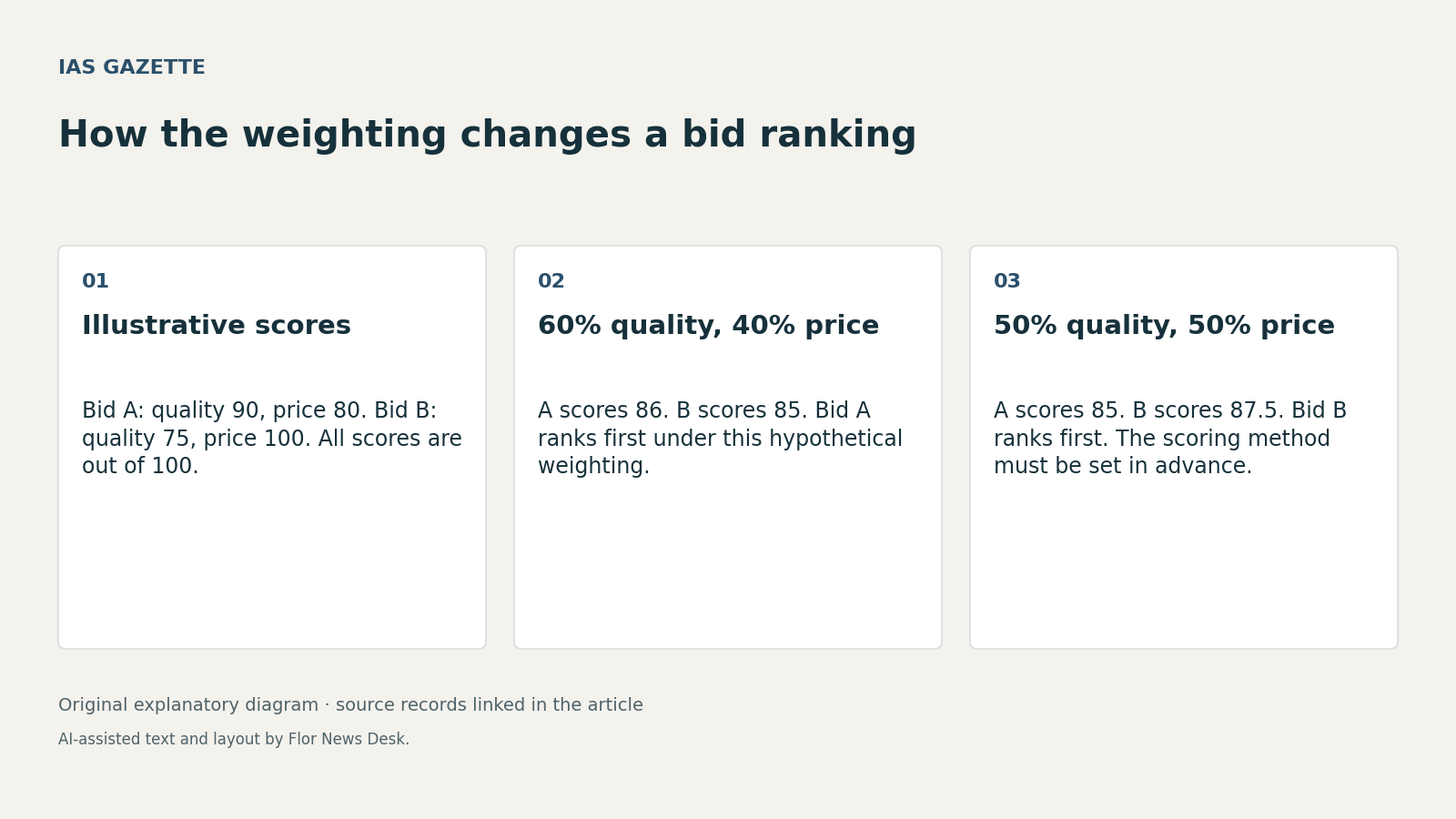
Consider a simplified hypothetical competition. Bid A receives a technical score of 90 out of 100 and a price score of 80. Bid B receives a technical score of 75 and a price score of 100. The higher price score represents a better result on the financial assessment; these are illustrative scores, not quoted prices.
With technical quality weighted at 60 percent and price at 40 percent, Bid A scores 86 overall: 54 technical points plus 32 financial points. Bid B scores 85: 45 plus 40. A wins by one point.
With each component weighted equally, A would score 85 and B would score 87.5. The ranking reverses even though neither bid changes. Both calculations are mathematically straightforward. The policy question is which weighting reflects the actual procurement need.
Publish the method before evaluating the bids
The Bank’s procurement guidance calls for evaluation criteria, their weightings and the way they will be applied to appear in the procurement documents. It also distinguishes minimum requirements from qualitative evaluation and ties the technical-financial balance to the risks and characteristics of the purchase.
In the hypothetical example, a score of 90 needs an explanation that can be checked against the published criteria. A polished description of a delivery plan is different from evidence that the proposed resources can deliver it. A criterion that rewards an outcome must be specific enough for evaluators to apply consistently.
Minimum requirements serve another purpose. If an essential condition is pass-or-fail, a strong score elsewhere should not quietly turn failure into an acceptable trade-off. The applicable procurement documents determine how those stages work.
Connect the award to the delivered result
An evaluation compares promises and evidence before a contract is performed. Public accountability continues after the award. If a proposal gained points for maintenance, staffing or a delivery timetable, the contract and subsequent reporting should make those commitments traceable.
That does not establish that the highest technical score will always produce the best result. Unexpected conditions can affect delivery, and scoring involves judgment. It does establish what an explanation of value should address: why particular qualities mattered, what evidence supported the scores and whether the purchased service met the commitments used to justify selection.
The worked example makes the central trade-off visible. Quality can alter the winning bid, but only a transparent method and a documented outcome can show what the public received for the additional cost.
Read our editorial standards or send a correction to the editorial desk.