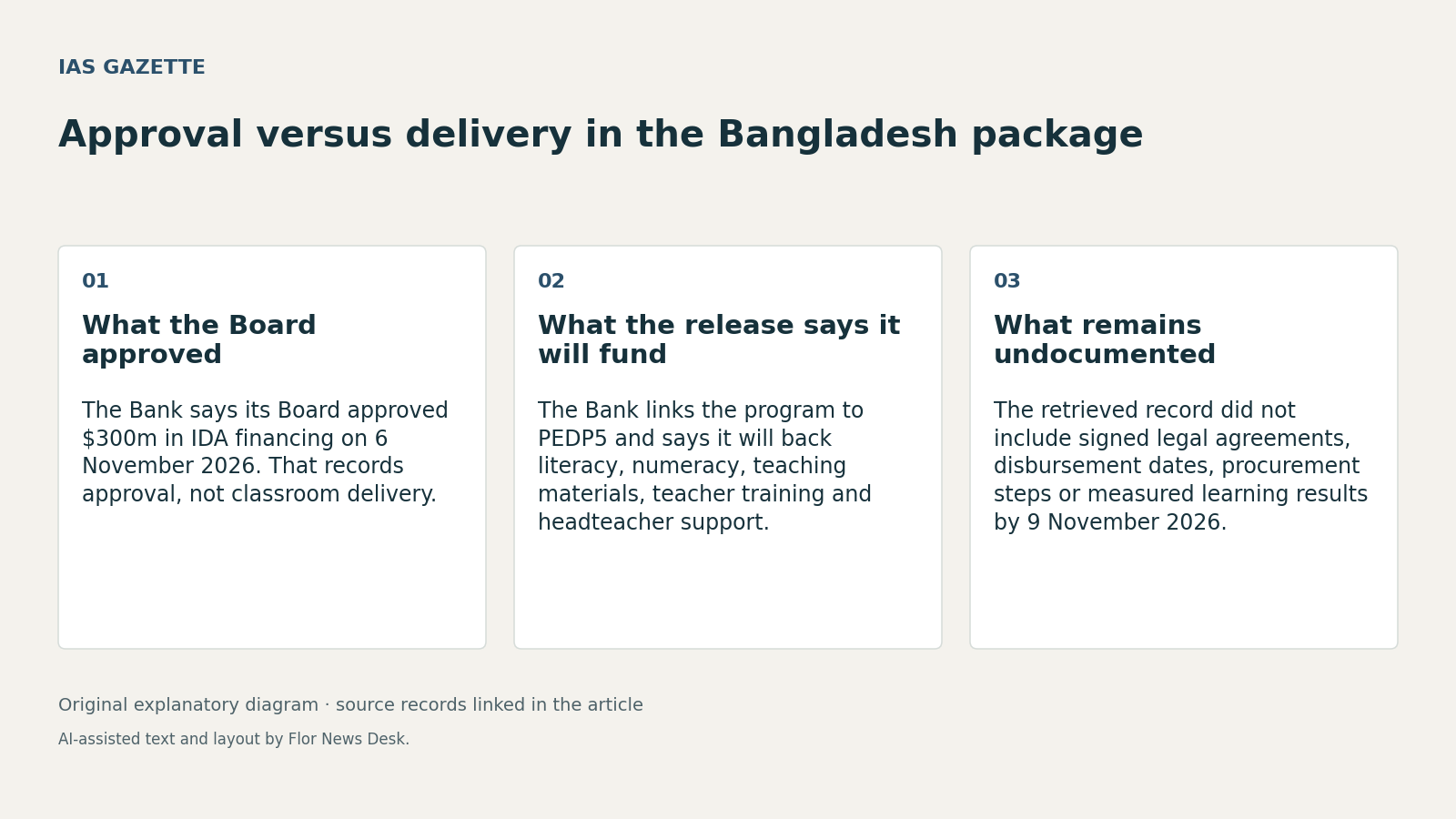
On 6 November 2026, the World Bank said its Board of Executive Directors approved $300 million in International Development Association financing for Bangladesh’s Learning Enhancement and Acceleration in Primary Education Program (World Bank press release, 6 November 2026). That is a concrete institutional decision. On the source record retrieved on 9 November 2026, however, it is still a financing approval rather than evidence that money has been disbursed or that classrooms have already received new support.
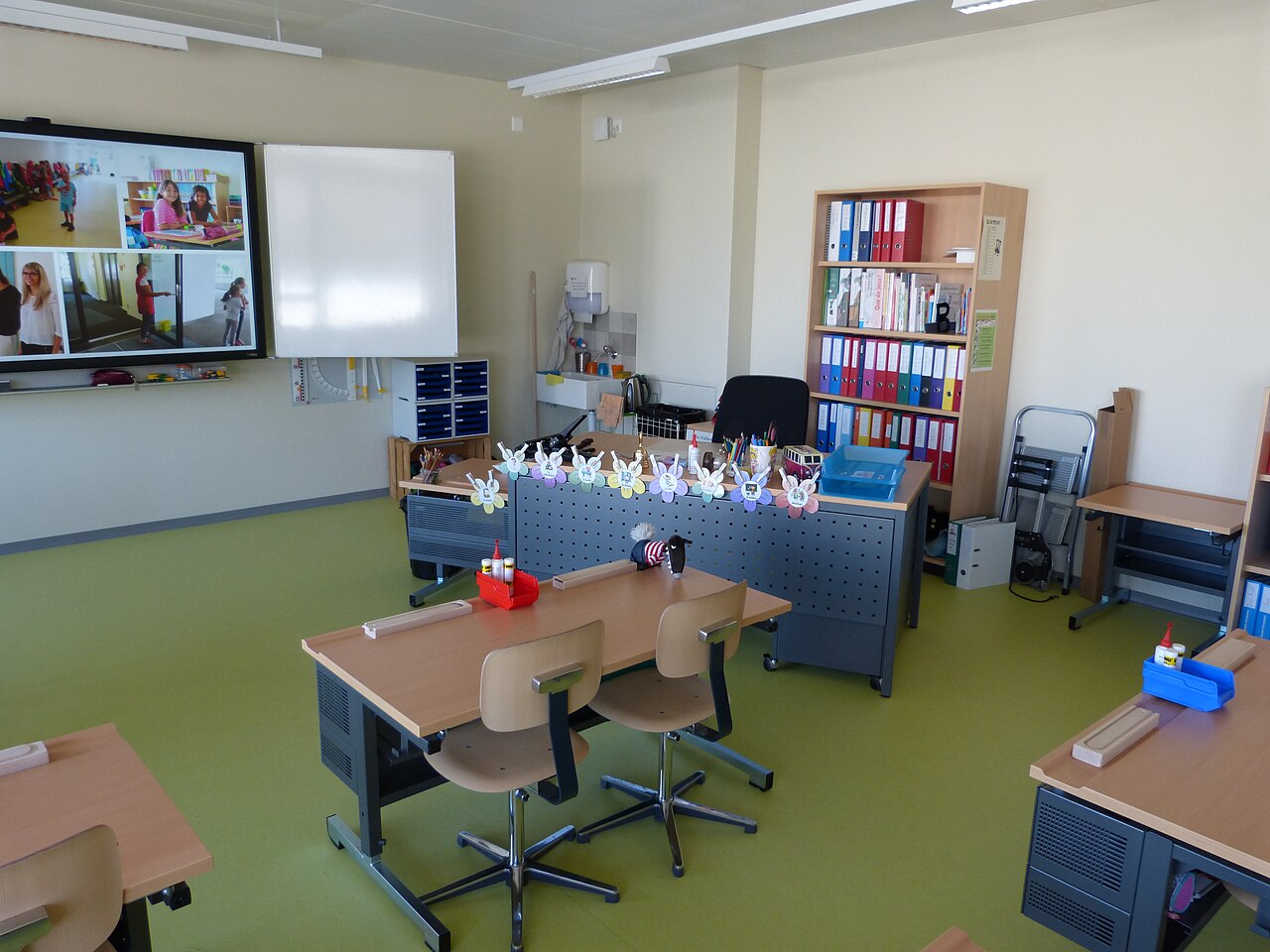
The publicly described scope is large. The World Bank says the program is intended to improve learning outcomes for 26 million children from pre-primary through grade 5 and to support the Government of Bangladesh’s Fifth Primary Education Development Program (World Bank press release, 6 November 2026). The same release says planned activities include a foundational literacy and numeracy package, teaching materials, structured lesson plans and teacher training, alongside leadership training for headteachers in 90% of government primary schools and stronger school management systems (World Bank press release, 6 November 2026). For readers tracking donor policy, that combination matters because it identifies the Bank’s stated priorities: foundational learning, management capacity and national scale.
What the release does not settle is just as important. The retrieved record did not include the Board paper, a financing agreement, signed legal documents, a disbursement schedule, procurement records or Bangladesh budget documentation tied to the program (World Bank press release, 6 November 2026). That means the public evidence reviewed here cannot yet establish when legal commitments will be completed, when any first tranche would move, which agency will receive funds first, or how national and subnational rollout will be sequenced. It also cannot demonstrate implementation, funds received or measured learning gains by 9 November 2026.
The financing terms in the release underline that uncertainty rather than remove it. The World Bank said the package comes from IDA and described a 25-year term with a five-year grace period (World Bank press release, 6 November 2026). But the same retrieved material, standing alone, did not provide the legal instrument that would let readers verify the exact form of the financing from the signed record. For diplomatic and development audiences, that distinction matters because approval headlines answer one question, while enforceable terms and disbursement conditions answer another.
A second verified record shows where those later steps should become easier to trace, but not that they have happened. The World Bank’s Projects & Operations portal says the institution publishes project lists, recently approved projects, notices and procurement resources. Yet the retrieved portal text in this brief did not itself name the Bangladesh education program, confirm the 6 November decision or show implementation progress for it (Projects & Operations portal). On this evidence, the monitoring trail that would connect Board approval to operational delivery is not yet established in the documents reviewed here.
That leaves a narrow but useful conclusion. The 6 November 2026 decision documents lender intent, headline financing and the Bank’s stated design priorities for Bangladesh’s primary education system (World Bank press release, 6 November 2026). It does not yet prove that legal signature, budget alignment, procurement, school-level rollout or learning outcomes have followed. Until those records appear, the most accurate description is that Bangladesh has a publicly announced World Bank Board approval for education financing, while the documentary evidence of implementation remains incomplete in the source record checked on 9 November 2026.
Read our editorial standards or send a correction to the editorial desk.