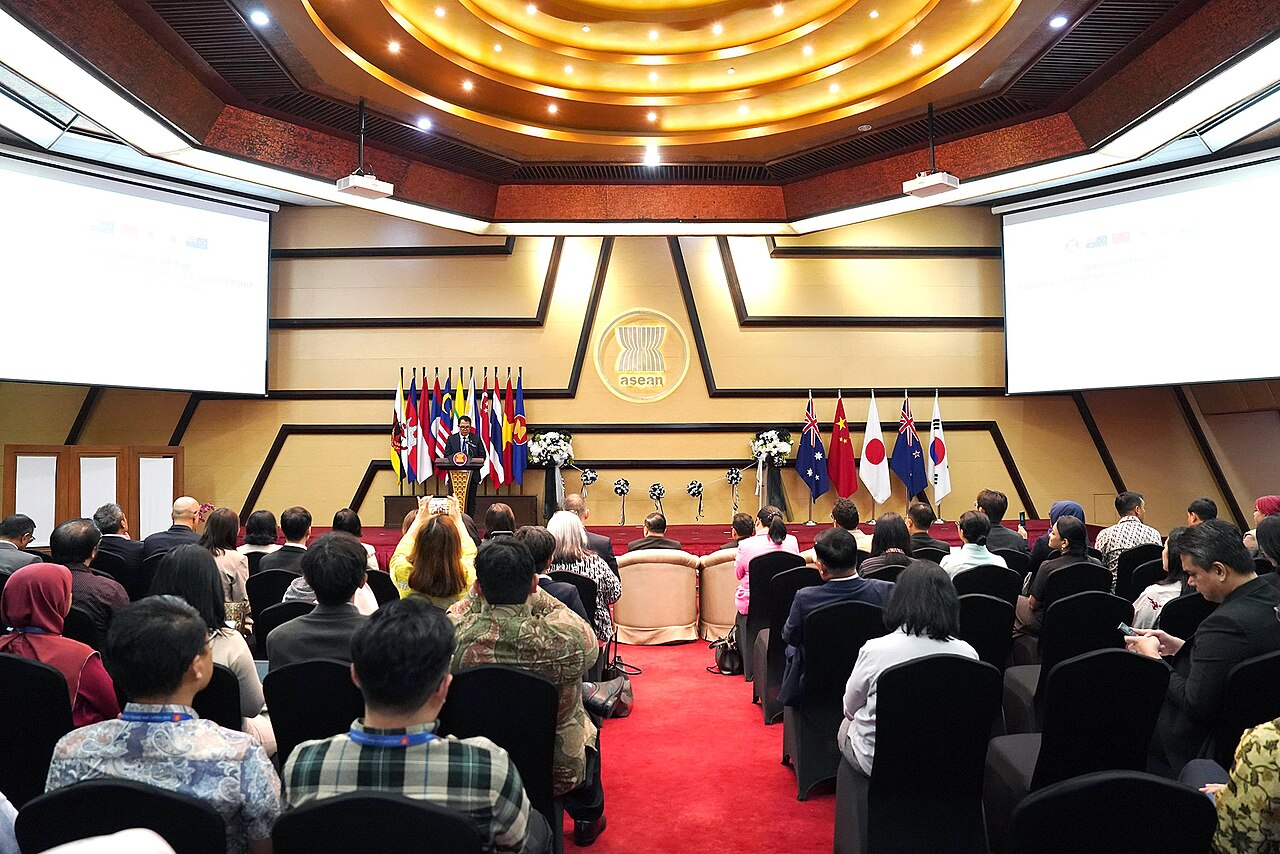

ESCAP has put poverty, ageing and the care economy into the same regional policy forum by scheduling the launch of *Social Outlook for Asia and the Pacific 2026: Eradicating Poverty and Empowering People* during the ninth session of its Committee on Social Development in Bangkok on 11–13 November 2026. That timing is supported by two separate UN records: ESCAP’s 4 November 2026 notice and the UN’s Week Ahead schedule for 7–13 November 2026, which lists the Bangkok meeting and says the diary is for planning purposes only and subject to change (ESCAP notice; UN Week Ahead).
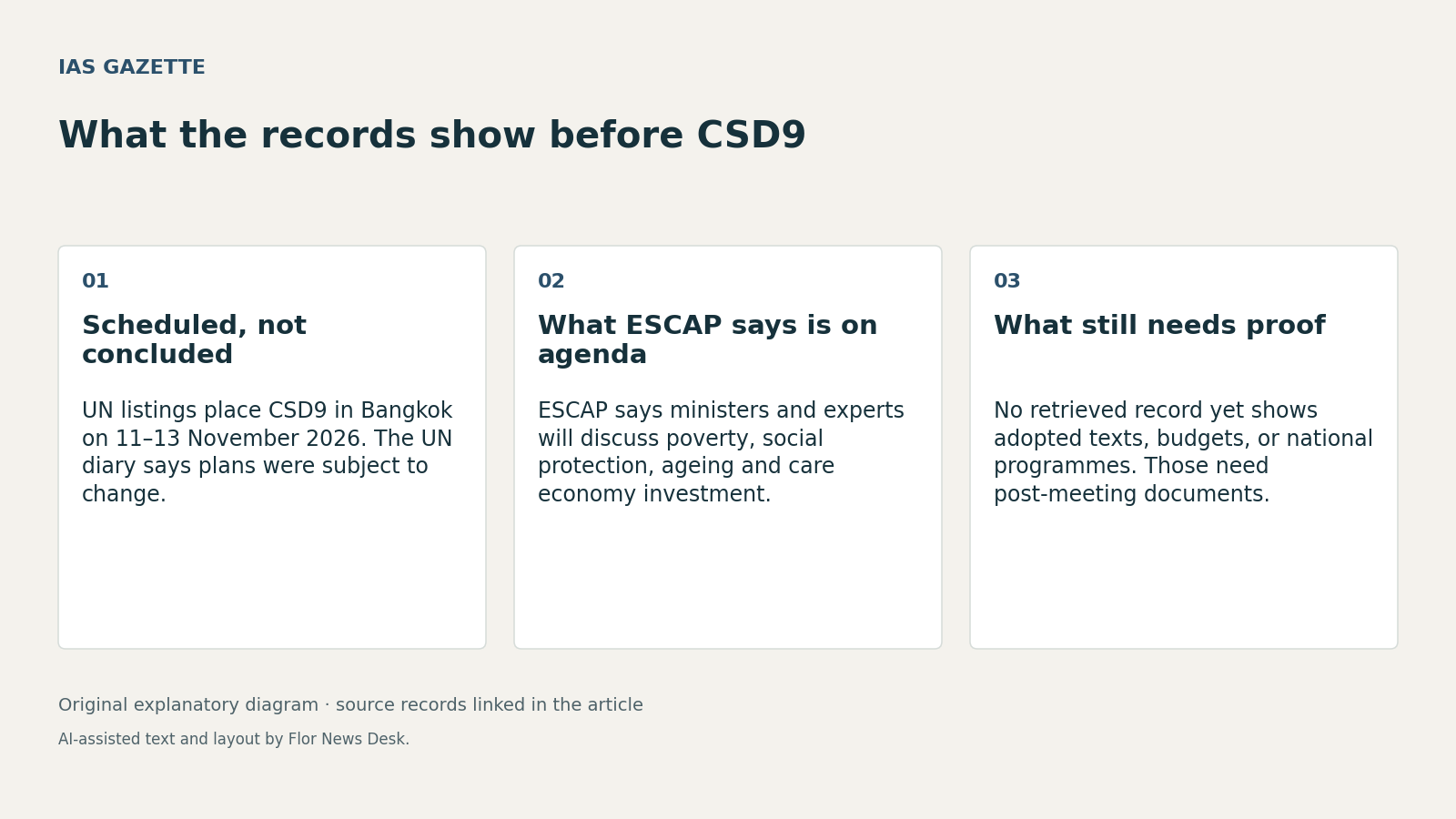
What the source record establishes, as of 8 November 2026, is an agenda rather than an achievement. ESCAP says ministers, senior policymakers and experts are due to discuss poverty reduction, stronger social protection systems, population ageing and investment in the care economy, and that the new report examines poverty trends in Asia and the Pacific through a multidimensional lens that includes housing, sanitation and access to education (ESCAP notice). That matters analytically because it signals a broader policy frame than income alone. If housing, sanitation and education access are treated as part of poverty measurement, the policy debate can extend from cash support to service delivery and public systems. The retrieved notice, however, does not yet provide the report text, indicators or recommendations.
The committee setting also gives the launch a diplomatic purpose. ESCAP says member States will have an opportunity to renew commitment to the Action Plan to Strengthen Regional Cooperation on Social Protection in Asia and the Pacific and to the Madrid International Plan of Action on Ageing, including preparations for the Fifth Review and Appraisal (ESCAP notice). But “opportunity” is the key distinction. Before the meeting opens, that wording does not prove that governments have renewed any commitment, agreed common language, changed national law or allocated money. A pre-event notice can show institutional intent; it cannot show implementation.
That gap between framing and action is the central policy question around the launch. A committee session can elevate issues by gathering ministers and officials around a shared text, and the UN diary’s decision to flag the report launch suggests ESCAP considers it a major element of the meeting’s public profile (UN Week Ahead). Still, nothing in the retrieved records shows donor pledges, budget lines, programme starts or measurable outcomes. Even the meeting logistics remain prospective: the Week Ahead entry is explicitly a planning schedule, while ESCAP’s notice points readers to a livestream route and programme page rather than to adopted decisions (UN Week Ahead; ESCAP notice).
For readers tracking whether this becomes more than a regional narrative, the first test will be documentary. Once available, the report itself should be checked for its poverty indicators, country breakdowns and policy recommendations, and those should then be compared with any committee outcome text or national statements. The second test will be fiscal and administrative: whether governments or partners attach money, regulations or programmes to the themes ESCAP has highlighted. On the evidence now public, the November launch is a policy moment. It is not yet proof of policy delivery (ESCAP notice; UN Week Ahead).
Read our editorial standards or send a correction to the editorial desk.