Twenty-two worker representatives from ten organizations attended safety training in Thailand's rubber sector on September 17–18, according to the International Labour Organization. The event creates a useful starting point for following a larger policy question: how does knowledge held by workers become an action that changes a workplace?
The ILO's September 18 account describes training in hazard identification, risk assessment, reporting and cooperation between workers and management. Participants also visited workplaces. The account records an activity and the organizer's assessment of it; it does not publish a later injury trend or establish that every participating workplace changed its practices.
A wider labour-rights programme
The project's separate description places the training within a Canadian-funded initiative running from February 2025 to February 2028. Its scope includes occupational safety, freedom of association, collective bargaining and eliminating child labour in the rubber supply chain. Those are programme objectives, not a certification that the whole sector meets them.
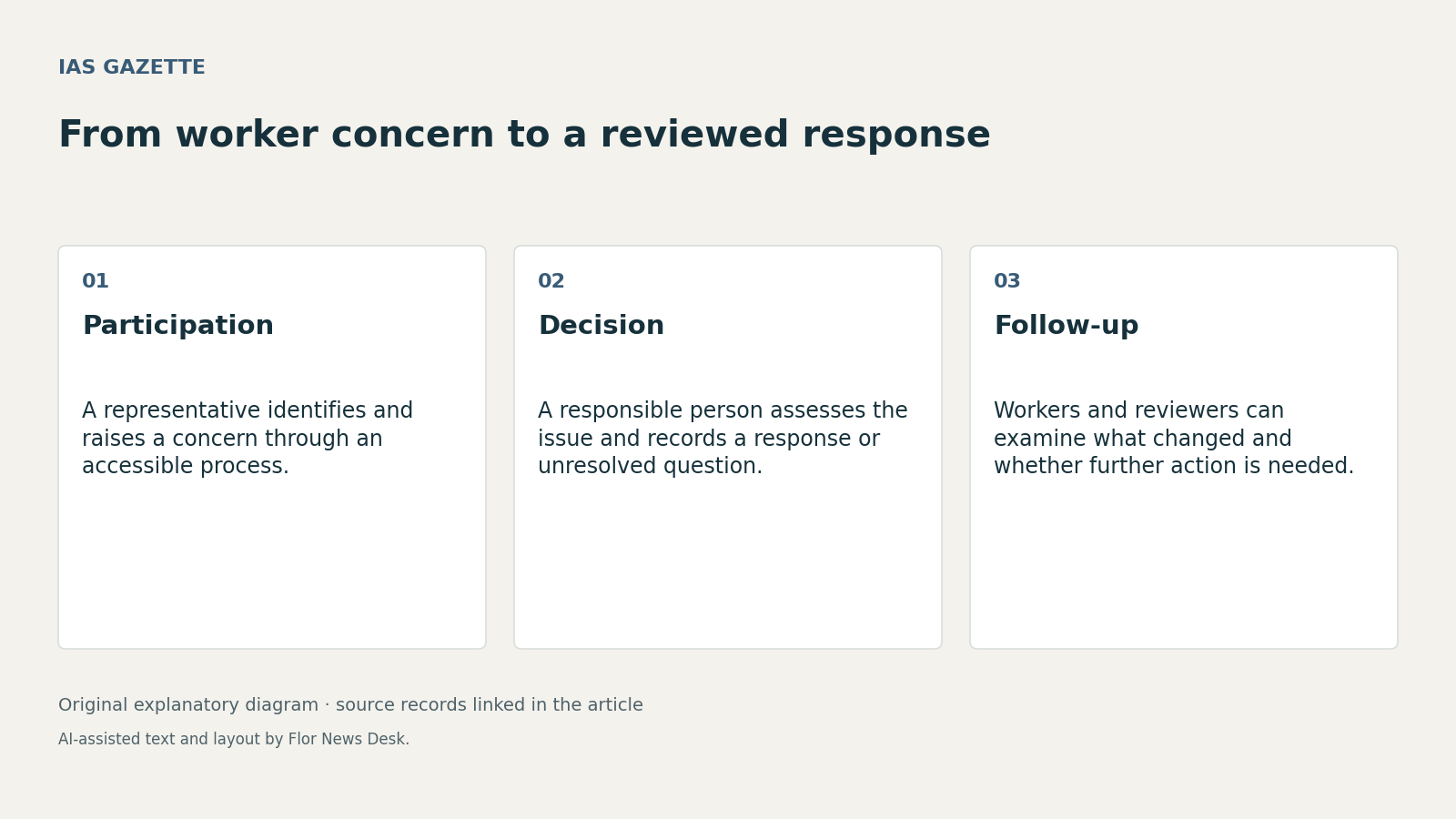
The relationship between those objectives is worth examining. A worker may recognize a hazard but still need a channel through which to raise it, a response from someone able to act, and a way to check whether the response worked. Training and participation therefore address connected questions. Counting attendance alone cannot show that the connection exists at a particular workplace.
Follow a concern through the decision
Imagine a hypothetical worker who reports a recurring problem with a machine. A useful record would distinguish the concern raised, the person assigned to assess it, the decision taken and the later check. A record showing that a meeting occurred would answer only one part of that sequence.
The example does not identify an actual defect or prescribe a technical safety intervention. It illustrates why worker participation is more than an invitation to speak. The decision trail allows participants and reviewers to see whether an issue was addressed, remained unresolved or required additional expertise.
Participation can also change what a report contains. If more concerns become visible after a new reporting channel opens, the number of reports could rise without establishing that underlying conditions deteriorated. Conversely, fewer reports would not by themselves demonstrate safer work. Interpreting either change requires information about who can report, what is recorded and the period being compared.
Keep the scale of the evidence clear
The September event involved a defined group of representatives. Their experience can inform follow-up reporting, but it is not a representative survey of Thailand's rubber workforce. Likewise, a programme's trade-readiness purpose does not make its training certificate proof of a supplier's compliance with a buyer's requirements.
The next informative evidence would show how participants used the training, which workplace processes changed and how workers participated in reviewing those changes. It should preserve disagreement and unresolved concerns where they exist. The public record currently supports an account of organized capacity building. Its longer-term significance depends on whether that capacity becomes sustained influence over workplace decisions.
Read our editorial standards or send a correction to the editorial desk.