
An International Labour Organization feature published on September 18 describes Indonesian small businesses combining resource-saving practices with better administration. The accounts suggest useful directions for development policy, but environmental improvement, commercial performance and working conditions each require their own evidence.
The ILO feature follows entrepreneurs in Yogyakarta who participated in green-tourism training. Its examples include using more of an aloe-vera crop and improving business records. The organization reports that the programme expanded beyond its initial pilots. These are attributed participant accounts and programme figures, rather than an independently evaluated estimate of the training's effects.
Start with what a greener practice changes
The ILO's PAGE programme description connects environmental policy with employment and the management of workplace change. It also says country approaches are tailored to local priorities and sectors. That framing gives the programme more than one purpose, which makes a single success measure inadequate.
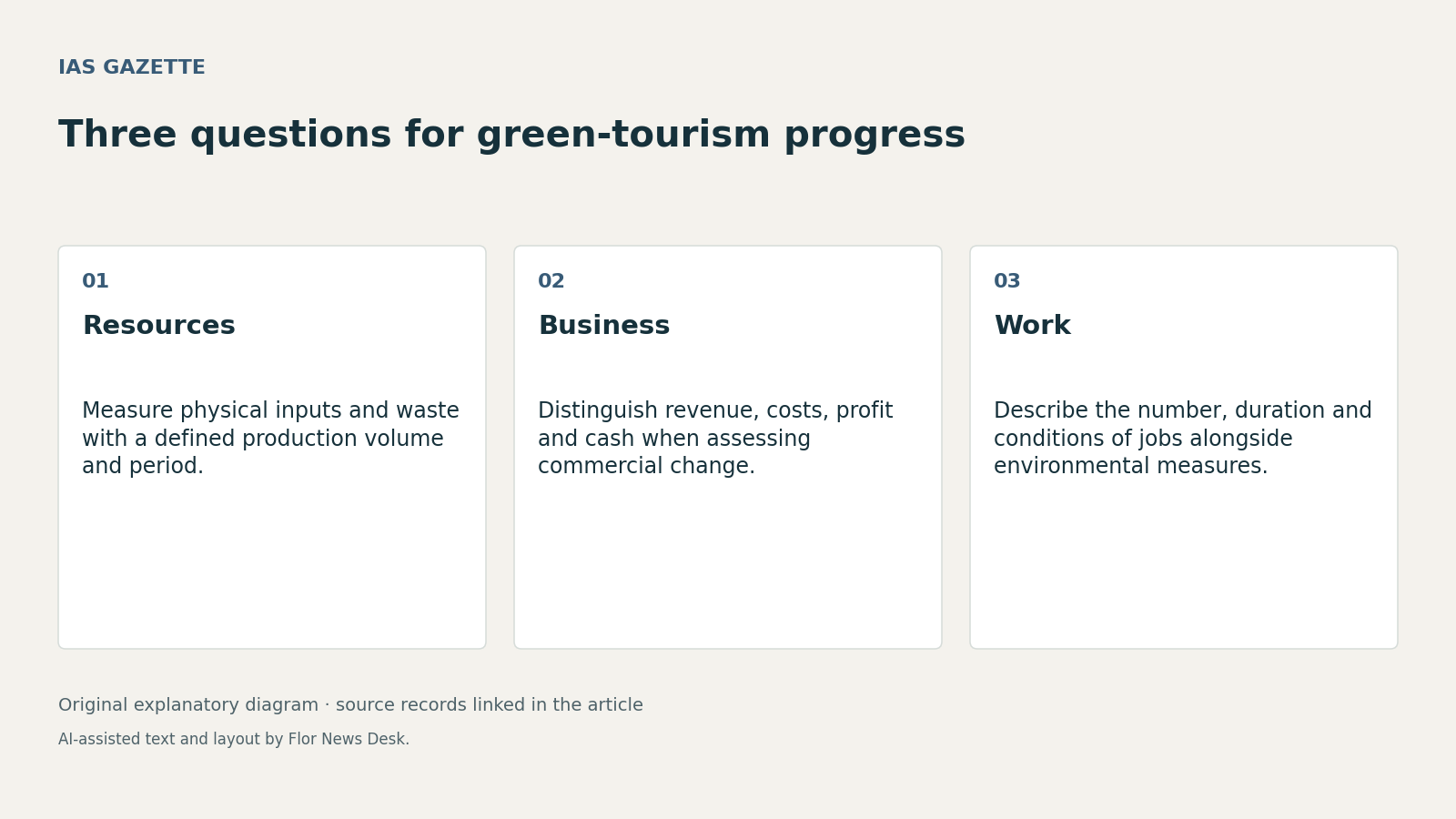
Consider a hypothetical beverage producer that makes better use of its raw material. Waste per bottle could fall while total waste rises if production expands quickly enough. Both statements could be true. A useful environmental account would therefore identify the physical material, the production volume and the comparison period.
The same reasoning applies to energy or packaging. A switch in packaging is an observable business decision. Establishing its overall environmental effect would require a defined boundary and relevant evidence. A photograph of the new container cannot resolve what happens during manufacture, reuse or disposal.
Business records make a different question answerable
Revenue, profit and cash available to pay bills measure different aspects of a business. If a hypothetical enterprise sells more but also spends more on inputs and staff, a revenue increase alone cannot establish the change in profit. Better records can make that comparison possible without predetermining its result.
This distinction matters for programme evaluation. A participant's account may identify a promising change worth investigating. To estimate the programme's contribution, an evaluator would also need to consider timing, other changes affecting the enterprise and an appropriate comparison. Participation and subsequent growth, by themselves, do not establish how much growth the training caused.
Job creation needs a workplace description
Adding workers is another distinct development. Its significance depends on what the work involves, its duration and conditions. The PAGE programme's employment purpose makes those questions relevant; an environmental gain should not be treated as a substitute for information about the people doing the work.
A practical follow-up could track a small set of participating businesses across consistent periods, pairing resource-use measures with business accounts and employment information. Such a design would need to explain its sample and limitations. It would not automatically represent all tourism enterprises in Indonesia.
The September feature offers concrete leads for that work. Its policy value increases when the reported practices become questions that can be examined separately: what changed physically, what changed financially, and what changed for workers. Keeping those questions distinct allows progress in one area to be recognized without assuming that every other outcome improved as well.
Read our editorial standards or send a correction to the editorial desk.